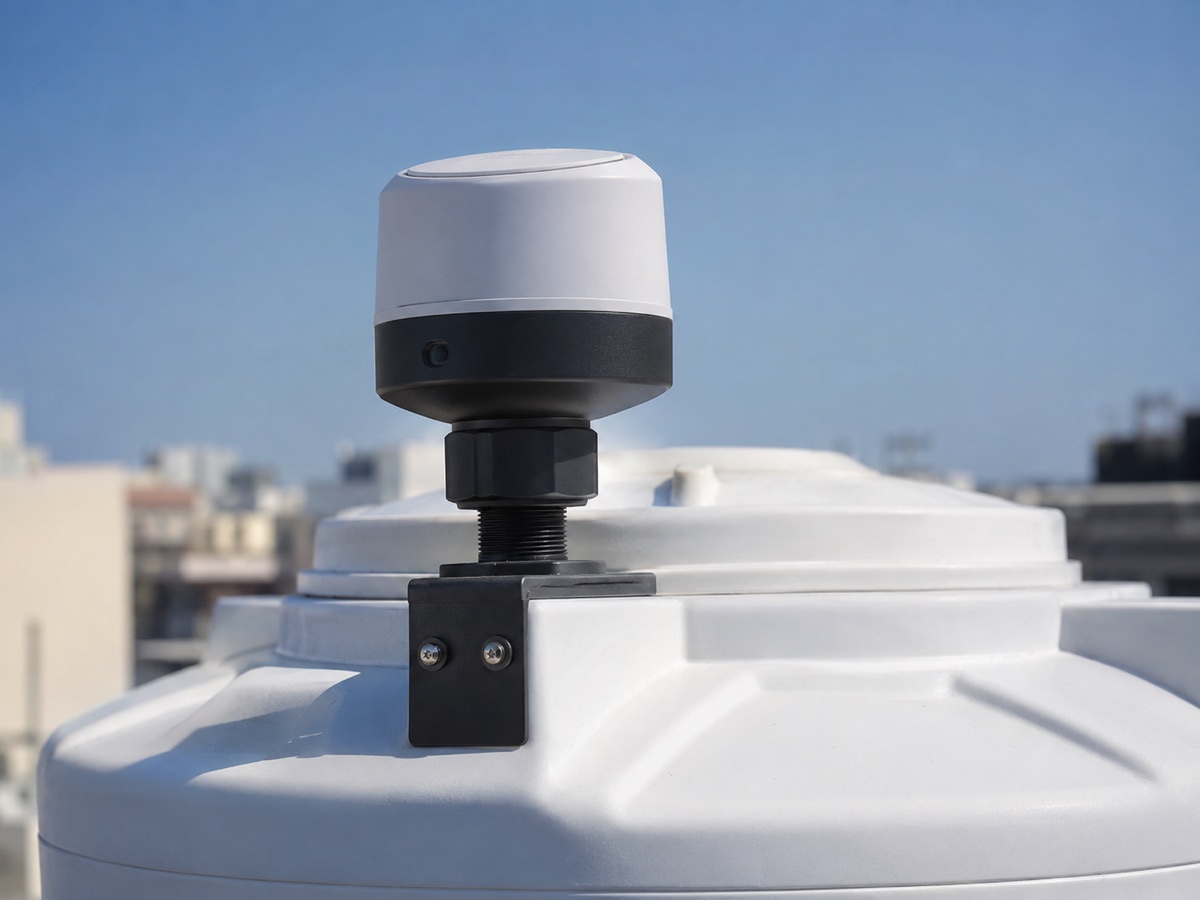
“Smart” and “AI-powered” get stamped on a lot of water products that are really just a level switch with an app. It’s worth being precise about what actually separates a traditional automatic level controller from an AI-driven water management system — because the gap is real, but it’s not where the marketing usually points. Here’s the honest breakdown.
What a traditional level controller does
A traditional controller does one job well: it senses tank level and switches the motor — on when low, off when full. Add an app and you can also see the level and switch the motor from your phone. That’s genuinely useful, and for a single tank it solves the overflow-and-manual-switching problem. But notice what it is: a reactive on/off device. It responds to the level right now. It doesn’t reason about anything.
Where AI-driven management is genuinely different
The difference isn’t “it switches the motor smarter.” The motor on/off logic is largely a solved problem. The difference is that an AI system uses the same sensor data to answer questions a level switch can’t:
- Prediction instead of reaction. By watching the pump’s electrical and vibration signature over time, it detects degradation — bearing wear, a fouling impeller, a creeping current draw — and warns you weeks before the pump fails. A level controller only knows the pump is off once it’s already dead.
- Water quality, not just quantity. With a TDS sensor, the system scores water safety daily, flags contamination spikes, and tracks hard-water trends. A level controller has no idea what’s in the water, only how much.
- Source intelligence. It identifies whether a given fill came from municipal supply, borewell, or tanker — and logs a full provenance record. Useful for compliance, for spotting a weakening borewell, and for knowing what you’re actually drinking.
- Learning your patterns. It learns when municipal supply typically arrives and when demand peaks, so it can fill ahead of a known rush rather than reacting after the tank’s already low.
- Explanation, not just alerts. Instead of a bare “low level” beep, it tells you “tank dropped 30% in two hours at 2am — possible leak.” The reasoning is the product.
The honest part: for one home, you may not need all of it
Let’s be straight — if you have a single tank and one motor at home, a good level controller with an app covers most of your pain, and the AI layer is a nice-to-have. The AI difference compounds with scale and stakes. The more tanks, pumps, and consequences you’re managing — a society with ten pumps, a hospital that can’t have a dry tap, a hotel where a shortage is a bad review — the more the difference between “a device that switches motors” and “a system that predicts, explains, and manages by exception” actually matters.
A simple way to tell them apart when shopping
Ask one question: what does it tell me that I didn’t already know? A level controller tells you the tank level and lets you switch the motor — things you could largely observe yourself. An AI system tells you things you couldn’t observe: that a pump is three weeks from failing, that last night’s fill was tanker water with high TDS, that one flat’s consumption jumped 40% (probably a leak). If a product markets itself as “AI” but only really reports level and switches the motor, it’s a level controller with a nicer app — and that’s fine, as long as you’re paying level-controller money for it.
Frequently asked questions
Isn’t “AI” just a buzzword on these products?
Often, yes — which is exactly why the test is what it tells you that you couldn’t see yourself. Real intelligence shows up as prediction, water-quality scoring, source identification, and plain-language explanations, not just remote on/off with a dashboard.
Do I need the AI features for a single home?
Not necessarily. A quality level controller with an app solves the core home problem. The AI layer earns its keep as the number of tanks, pumps, and the cost of failure go up — which is why it matters most for buildings and portfolios.
Can an AI system still work as a plain level controller if I want it to?
Yes — the reliable on/off automation is the foundation it’s built on and works independently of connectivity. The intelligence sits on top; you get the basic automation regardless, and the predictive and analytical features add value as you use them.
