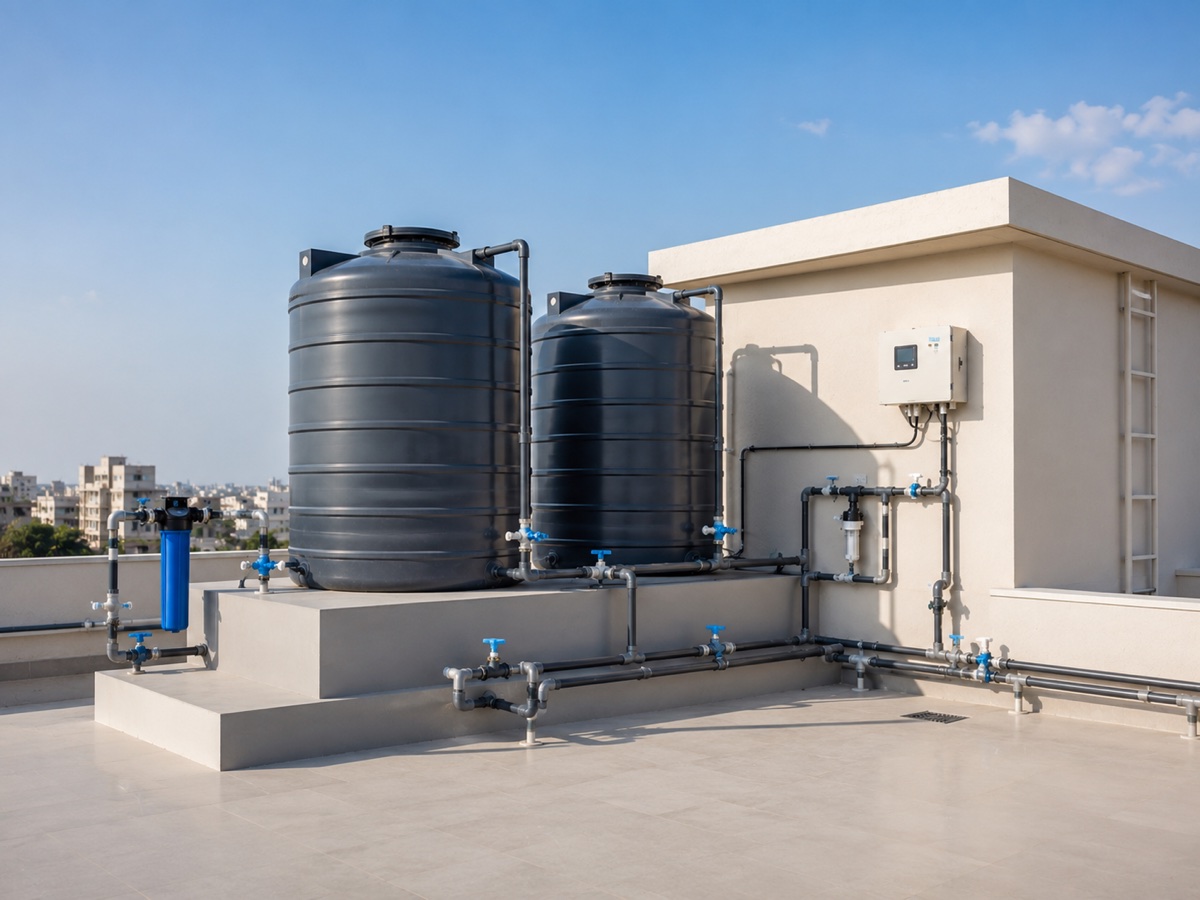
Your motor is clearly running — you can hear it — but the tank level isn’t moving. This is one of the most damaging situations a pump can be in, because it’s running dry: generating heat with no water to cool it, wearing out seals and windings, and consuming electricity for zero useful work. Understanding why it happens is the first step to stopping it.
The most common causes
- The source has run dry. The single most common reason, especially with borewells in summer. The water table has dropped below the pump’s intake, so it’s pulling air. The motor runs, but there’s nothing to lift.
- Airlock in the suction line. Air trapped in the pump or suction pipe breaks the vacuum the pump needs to lift water. The impeller spins, but it’s churning air instead of moving water.
- A leak in the suction line. Even a small crack or loose joint on the suction side lets air in, which breaks the vacuum the same way an airlock does.
- Blockage. Silt, rust, scale, or debris clogging the suction strainer, foot valve, or delivery line. The pump struggles against the obstruction and moves little or no water.
- Worn impeller or failed foot valve. An old impeller loses its ability to build pressure; a failed foot valve lets primed water drain back down between cycles, so the pump loses prime.
Why “the motor runs” is the dangerous part
A pump moving water is cooled by that water. A pump running dry has no coolant — friction heat builds within seconds, and it’s the leading cause of submersible pump failure in India. Depending on the pump, a burnt-out motor is a ₹2,000–₹15,000 replacement, plus the downtime while it’s out. Every extra minute the motor runs dry is compounding damage.
How to diagnose it quickly
- Check the source first. For a borewell, has the yield dropped recently, or is it peak summer? A dry source is the most likely answer.
- Listen to the motor’s sound. A pump running dry often sounds different — higher-pitched, straining, or “hollow” compared to its normal loaded hum.
- Check for prime. For surface pumps, loss of prime (from an airlock or suction leak) is common. Re-priming that immediately fixes it points to a suction-side air leak worth tracing.
- Inspect the strainer and foot valve. Visible blockage or a foot valve that doesn’t hold water are quick to confirm.
The real problem: nobody’s watching
Most of the damage from this situation happens for one reason — nobody noticed the motor was running dry until much later. A pump quietly running dry at 2am, or while everyone’s at work, can rack up an hour of dry-run damage before anyone hears it. The fix isn’t just repairing the immediate cause; it’s making sure the next dry run gets caught in seconds, not hours.
How automatic dry-run protection works
Dry-run protection stops the pump automatically when there’s no water to move. There are two proven signals:
- Level sensing. If the pump is running but the destination tank level isn’t rising after a reasonable interval, something is wrong — the system stops the motor and alerts you.
- Motor behaviour sensing. A pump running dry draws a measurably different current and vibrates differently than one moving water. A controller monitoring this can detect a dry run within seconds — often faster than level sensing alone, because it doesn’t wait for the tank to “fail to fill.”
Combining both signals is what makes protection reliable: the current/vibration signature catches it fast, and the level confirmation prevents false alarms. Instead of a burnt-out motor and a repair bill, you get a notification: “Pump 2 ran dry and was stopped — check the source.”
Frequently asked questions
Is running dry really that damaging, or is it exaggerated?
It’s genuinely the leading cause of submersible pump failure. The heat builds within seconds because there’s no water to carry it away — a few minutes of dry running can destroy seals and windings.
My borewell runs dry every summer. Can automation help?
Yes — this is exactly the case dry-run protection is built for. Rather than you or an operator watching the pump, the system stops it the moment it detects a dry run and restarts once the source recovers, so the pump is protected without constant supervision.
Will dry-run protection cause false stops?
A well-designed system that combines motor-behaviour sensing with level confirmation is resistant to false stops, because it cross-checks two independent signals before acting rather than reacting to one noisy reading.
