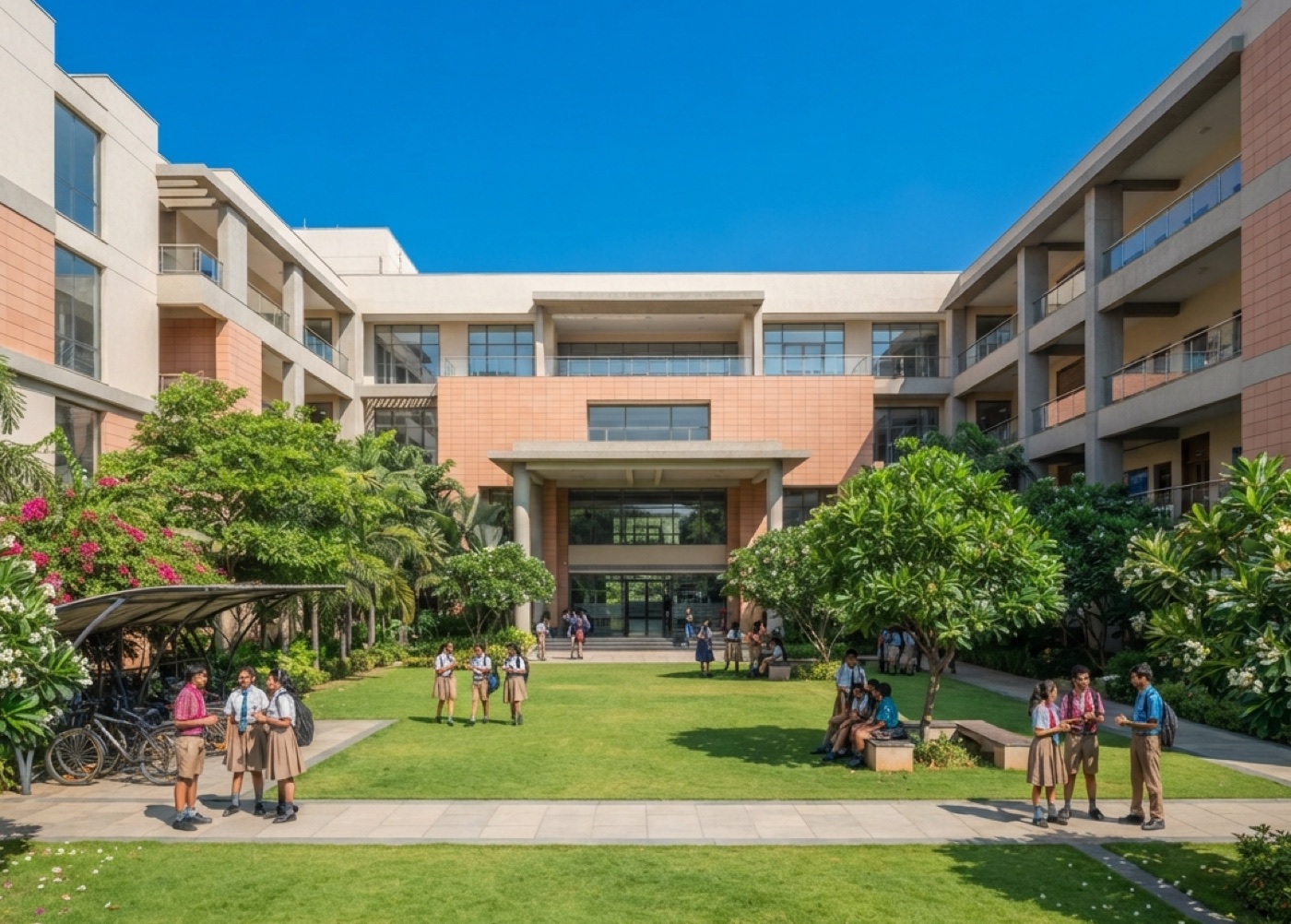
A home’s water demand is relatively steady through the day. A school or hostel’s demand is almost the opposite — sharp, predictable peaks around specific times (morning wake-up and washing, evening return from classes), and comparatively low demand the rest of the day. This changes what “good” water automation actually looks like for this segment, compared to a home or even a hotel with more evenly spread guest usage.
Why peak load, not just capacity, is the real problem
A dormitory with 200 students doesn’t use water evenly across 24 hours — a large share of daily consumption happens in two tight windows, often 30-60 minutes each, as students wash up before class and again in the evening. A tank that’s perfectly adequate on average can still run critically low during these windows if it isn’t full going into them. This is fundamentally a timing problem, not just a capacity problem — the same total daily volume, filled at the wrong time, still causes a shortage during peak demand.
Why reactive automation isn’t quite enough here
Standard automation — fill when low, stop when full — works fine for steady demand, but for sharp peak-load patterns it can still mean a tank drops uncomfortably low right in the middle of the highest-demand window, simply because the system only started refilling once the threshold was crossed, and refill rate may not keep pace with peak draw. The fix isn’t more automation intelligence exactly — it’s scheduling awareness.
What scheduled pre-fill actually means
Rather than only reacting to level thresholds, a system aware of known demand patterns can proactively fill tanks to full ahead of an expected peak window — for example, ensuring the tank is at or near 100% by 6am, before the morning rush, rather than waiting for the level to drop and reacting during the rush itself. This requires the system to either be configured with known peak windows (straightforward for a school with a fixed daily schedule) or to learn the pattern automatically over a few weeks of observed usage.
Mid-day meal programs add a second demand type
Many schools run mid-day meal programs with their own water demand for cooking and cleanup, at a specific time of day, separate from the dormitory/washroom pattern. This is a third, distinct demand window on top of morning and evening peaks, and a system managing overall water supply needs to account for it as well — particularly if the same source or tank feeds both the kitchen and the hostel blocks.
What the reporting side needs to show
School administration typically needs different information than a hotel or hospital facilities team — usage reporting that supports infrastructure planning and any accreditation documentation (CBSE/NAAC infrastructure adequacy reviews commonly ask about reliable water supply for hostels and labs) matters more than granular per-room billing, which is more relevant to hospitality. A useful report for a school shows consistent supply through peak windows over time — evidence the infrastructure reliably handles demand, not just a snapshot.
Multiple blocks, one campus
Larger schools and colleges often have multiple hostel blocks, academic buildings, and sometimes staff quarters, each with somewhat different demand timing (a boys’ hostel and girls’ hostel might have slightly offset peak windows, for instance). A campus-wide system needs visibility across all of these from one dashboard, rather than treating each block as an isolated installation — this also allows redistributing supply between blocks if one runs short while another has surplus.
What this looks like operationally
In practice, solving the peak-load problem well means: tanks reliably full going into known demand windows, alerts if a fill pattern deviates from the expected schedule (which could indicate a supply issue worth investigating before it becomes a shortage), and enough historical data to identify whether the underlying tank/pump capacity itself needs to grow as student numbers increase, rather than discovering that the hard way during a shortage.
Frequently asked questions
Does peak-load scheduling require manual configuration by school staff?
Better systems can learn the pattern automatically from a few weeks of usage data, though manual configuration (setting known class/wake-up timings) can jump-start accuracy immediately rather than waiting for the system to learn it.
Is this relevant for day schools without hostels?
Less so — the sharp peak-load problem is primarily a hostel/dormitory issue, since day schools don’t have the same concentrated morning wash-up demand from residential students. Day schools still benefit from basic automation, just without the scheduling complexity.
How does this interact with monsoon or seasonal supply changes?
Seasonal patterns (municipal supply changes, monsoon vs summer differences) are a separate layer on top of daily peak-load patterns — a well-designed system should account for both, adjusting thresholds seasonally while still handling the daily peak-load timing correctly within whatever supply is available that season.
